Henry Art Gallery
University of Washington / Seattle, WA
206-543-2280
http://www.henryart.org/
Shifting Ground: Transformed
Views of the American Landscape
February 10 - August 20, 2000
 The American perception of "the land"
has been a vastly changing one over the last one hundred and fifty years.
The advent of train travel, industrialization, rapid urban growth, and the
popularization of the automobile, the computer and development of mass communications
have all had effects on the collective view of the land we inhabit. Using
technology as "a frame," "Shifting Ground: Transformed Views
of the American Landscape" traces the impact of these technologies
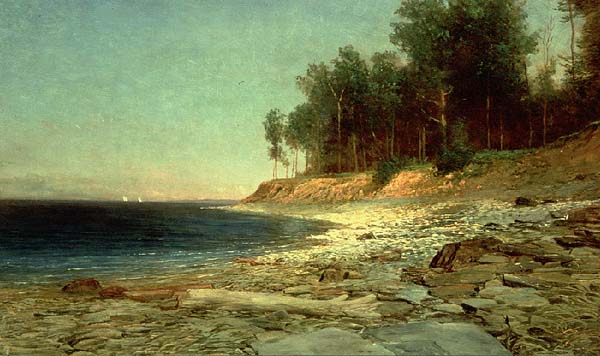
and the trends in perception that they have spurred. (left: Homer
Dodge Martin (1836-1897), On Lake Ontario, 1875, oil on canvas, 12
1/4 x 21 1/4 inches, Henry Art Gallery, Horace C. Henry Collection, FA26.87)
The American perception of "the land"
has been a vastly changing one over the last one hundred and fifty years.
The advent of train travel, industrialization, rapid urban growth, and the
popularization of the automobile, the computer and development of mass communications
have all had effects on the collective view of the land we inhabit. Using
technology as "a frame," "Shifting Ground: Transformed Views
of the American Landscape" traces the impact of these technologies
and the trends in perception that they have spurred. (left: Homer
Dodge Martin (1836-1897), On Lake Ontario, 1875, oil on canvas, 12
1/4 x 21 1/4 inches, Henry Art Gallery, Horace C. Henry Collection, FA26.87)
 "Shifting
Ground" examines the evolving relationship that Americans have with
the land as reflected through selected works from the last 150 years of
American landscape art. Dramatic physical alterations, uses and experiences
of the American landscape are made visible through the work of more than
seventy-five artists from Winslow Homer to Jessica Bronson. The exhibition,
curated by Associate Curator and Luce Fellow Rhonda Lane Howard and organized
by the Henry Art Gallery, brings important works from the Henry's permanent
collection together with works
"Shifting
Ground" examines the evolving relationship that Americans have with
the land as reflected through selected works from the last 150 years of
American landscape art. Dramatic physical alterations, uses and experiences
of the American landscape are made visible through the work of more than
seventy-five artists from Winslow Homer to Jessica Bronson. The exhibition,
curated by Associate Curator and Luce Fellow Rhonda Lane Howard and organized
by the Henry Art Gallery, brings important works from the Henry's permanent
collection together with works  from the Addison Gallery of American Art, the Yale
University Art Gallery and selected works from other private and public
collections. "Shifting Ground" is on view in the North Galleries
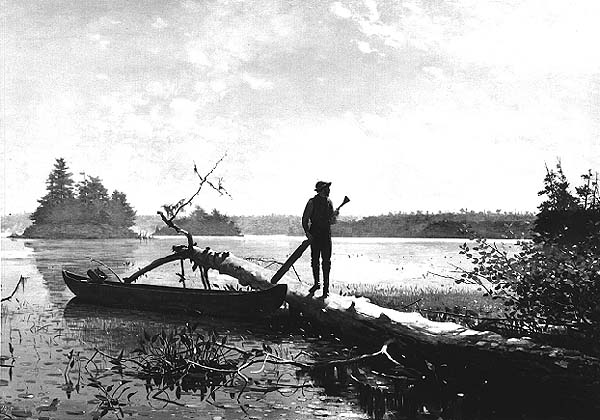
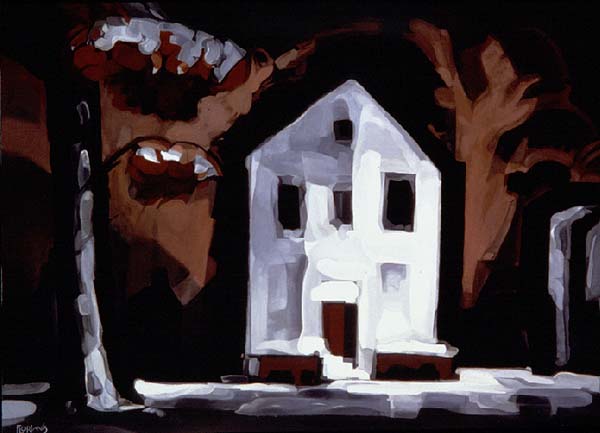
through August 20, 2000. (left: Winslow Homer, An Adirondack Lake,
1870, oil on canvas, 24 1//4 x 38 1/4 inches, Henry Art Gallery, Horace
C. Henry Collection; right: Oscar Bluemner, Radiant Night, 1933,
oil on canvas, Addison Gallery of American Art, Phillips Academy, Andover,
MA, photo: Greg Harris)
from the Addison Gallery of American Art, the Yale
University Art Gallery and selected works from other private and public
collections. "Shifting Ground" is on view in the North Galleries
through August 20, 2000. (left: Winslow Homer, An Adirondack Lake,
1870, oil on canvas, 24 1//4 x 38 1/4 inches, Henry Art Gallery, Horace
C. Henry Collection; right: Oscar Bluemner, Radiant Night, 1933,
oil on canvas, Addison Gallery of American Art, Phillips Academy, Andover,
MA, photo: Greg Harris)
The second half of the nineteenth century was a period
of remarkable innovation and invention, particularly in the arenas of transportation
and communication technologies. Widespread industrialization and new developments
in modes of transportation were catalysts in a recasting of the land's role
in the American mind. A wilderness previously perceived as impenetrable
and foreboding, metamorphosed into an inviting and  picturesque setting for recreation. The industrial
revolution, while helping to shepherd in the recreation movement, truly
set in motion the land's eventual rampant degradation. In due course, currents
of environmentalism prompted a rediscovery of the landscape and nature's
splendor and an attempt to rebuild what industrialization had left ravaged.
Throughout the history of the United States, artists have reacted to technological
advances and physical changes in the land and their art has reflected shifts
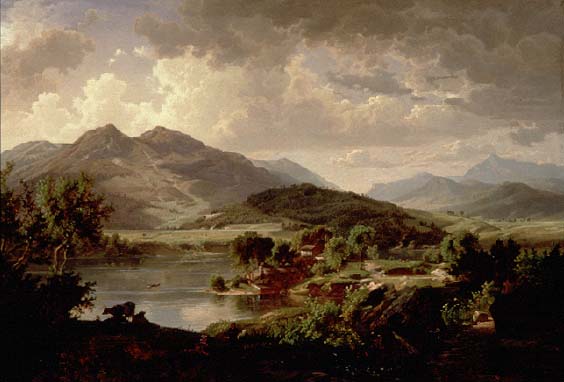
in collective American perception. (left: William Trost Richards.
A View in the Adirondacks, c. 1857. Oil on canvas. 30 1/8 x 44 1/4
inches. Henry Art Gallery, gift of J.W. Clise, photo: Steven Young)
picturesque setting for recreation. The industrial
revolution, while helping to shepherd in the recreation movement, truly
set in motion the land's eventual rampant degradation. In due course, currents
of environmentalism prompted a rediscovery of the landscape and nature's
splendor and an attempt to rebuild what industrialization had left ravaged.
Throughout the history of the United States, artists have reacted to technological
advances and physical changes in the land and their art has reflected shifts
in collective American perception. (left: William Trost Richards.
A View in the Adirondacks, c. 1857. Oil on canvas. 30 1/8 x 44 1/4
inches. Henry Art Gallery, gift of J.W. Clise, photo: Steven Young)
 "Shifting
Ground" includes works in a variety of media - paintings, photographs,
drawings, prints and new media works - that illustrate technology's physical
impact on the landscape and chronicle the changing American perception of
the land. Nineteenth-century technological advances gave Americans the power
to tame the wilderness and led the birth of industrialization and urbanization.
While many landscape artists at the end of the nineteenth century attempted
to escape this technological chaos by taking romantic retreats, the artists
of the first half of the twentieth century reconciled these dynamic forces
by celebrating them. Painters such as William Merritt Chase, George Inness
and Winslow Homer, among others, presented a landscape of quiet retreat
and beauty, while artists including Berenice Abbott, Stuart Davis, Arthur
G. Dove, Edward Hopper, Charles Sheeler and Grant Wood captured the intensity
and complexity of urban, regional, industrial and suburban life in their
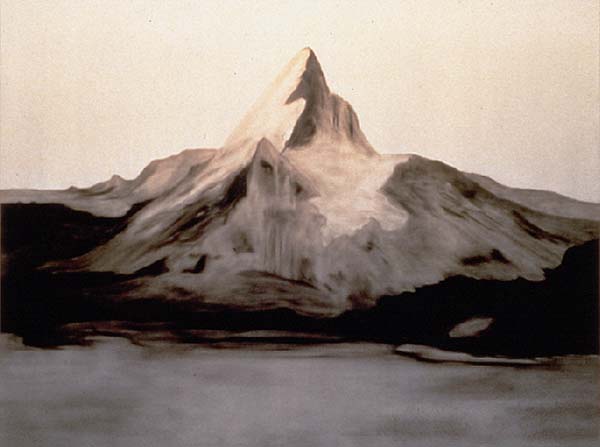
landscapes. (left: Cameron Martin,. Untitled, (CMO54), 1999.
Oil on canvas. 36" x 48". Courtesy of the artist and Howard House,
Seattle)
"Shifting
Ground" includes works in a variety of media - paintings, photographs,
drawings, prints and new media works - that illustrate technology's physical
impact on the landscape and chronicle the changing American perception of
the land. Nineteenth-century technological advances gave Americans the power
to tame the wilderness and led the birth of industrialization and urbanization.
While many landscape artists at the end of the nineteenth century attempted
to escape this technological chaos by taking romantic retreats, the artists
of the first half of the twentieth century reconciled these dynamic forces
by celebrating them. Painters such as William Merritt Chase, George Inness
and Winslow Homer, among others, presented a landscape of quiet retreat
and beauty, while artists including Berenice Abbott, Stuart Davis, Arthur
G. Dove, Edward Hopper, Charles Sheeler and Grant Wood captured the intensity
and complexity of urban, regional, industrial and suburban life in their
landscapes. (left: Cameron Martin,. Untitled, (CMO54), 1999.
Oil on canvas. 36" x 48". Courtesy of the artist and Howard House,
Seattle)
By the middle of the twentieth century, virtual "windows
onto the world" - the television, the automobile and the airplane -
had transformed perceptions of the American landscape and had reshaped artists'
frame of vision; the TV screen, the view from the window of a car or train
or plane became ubiquitous. Painters from Roy Lichtenstein to Sylvia Mangold
created work that reflected this new frame and the culture in which it existed.
Other artists including Lewis Baltz, Mary Lucier, Richard Misrach and Edward
Ruscha turned their gaze to environmental change and to the politics of
a landscape radically and irrevocably transformed in the name of progress.
Today the landscape provides fodder for artists envisioning the future as
well as those who see through the lens of post-industrial culture. From
the recasting of landscape logos by Cameron Martin to the paintings of Kevin
Appel, which suggest a virtual interior/exterior landscape, artists continue
to explore the landscape in dynamic ways.
"Shifting Ground: Transformed Views of the American
Landscape" is the second of two exhibitions supported by the Henry Luce Foundation.
The three-year grant awarded to the Henry Art Gallery encourages exploration
 of
the American portions of the permanent collection, further accessibility
to this collection and additional scholarship on American art. Funding for
this exhibition has been provided by the Henry Luce Foundation, Inc; the
Museum Loan Network, a national collection-sharing program funded by the
John S. and James L. Knight Foundation and the Pew Charitable Trusts, and
administered by MIT's Office of the Arts; PONCHO; The Boeing Company;
of
the American portions of the permanent collection, further accessibility
to this collection and additional scholarship on American art. Funding for
this exhibition has been provided by the Henry Luce Foundation, Inc; the
Museum Loan Network, a national collection-sharing program funded by the
John S. and James L. Knight Foundation and the Pew Charitable Trusts, and
administered by MIT's Office of the Arts; PONCHO; The Boeing Company;  WRO,
Inc.; Henry Art Gallery Special Exhibitions Initiative donors and Mr. and
Mrs. Thomas W. Barwick. An 80-page catalogue accompanies the exhibition.
The catalogue includes 24 color images, an essay by Associate Curator Rhonda
Lane Howard and six, two-page essays from Julie R. Johnson, Laura Landau,
Marta Lyall, Raymond William Rast, Leroy Searle and Phillip Thurtle. The
catalogue is available at the Henry Art Gallery shop. (left: William
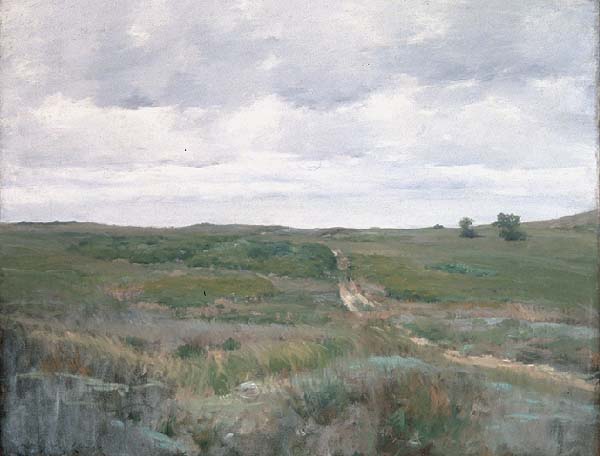
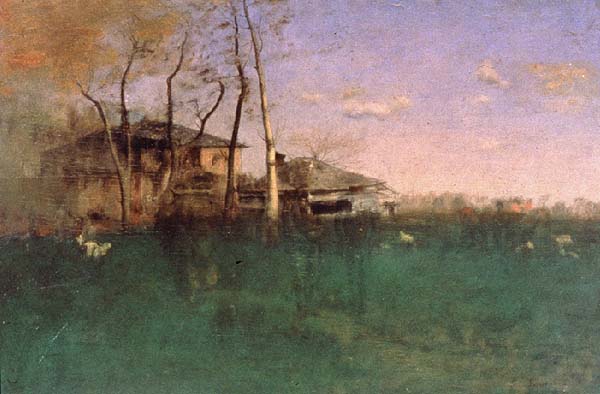
Merritt Chase (1849-1916), Over the Hills and Far Away, c. 1897,
oil on canvas, 25 3/4 x 32 3/4 inches, Henry Art Gallery, Horace C. Henry
Collection, 26.23; right: George Inness, Goochland, West Virginia,
1884, oil on wood panel, 20 1/16 x 30 1/8 inches, Henry Art Gallery, Horace
C. Henry Collection)
WRO,
Inc.; Henry Art Gallery Special Exhibitions Initiative donors and Mr. and
Mrs. Thomas W. Barwick. An 80-page catalogue accompanies the exhibition.
The catalogue includes 24 color images, an essay by Associate Curator Rhonda
Lane Howard and six, two-page essays from Julie R. Johnson, Laura Landau,
Marta Lyall, Raymond William Rast, Leroy Searle and Phillip Thurtle. The
catalogue is available at the Henry Art Gallery shop. (left: William
Merritt Chase (1849-1916), Over the Hills and Far Away, c. 1897,
oil on canvas, 25 3/4 x 32 3/4 inches, Henry Art Gallery, Horace C. Henry
Collection, 26.23; right: George Inness, Goochland, West Virginia,
1884, oil on wood panel, 20 1/16 x 30 1/8 inches, Henry Art Gallery, Horace
C. Henry Collection)
Read more about the Henry
Art Gallery in Resource Library Magazine
For further biographical information on selected artists
cited above please see America's Distinguished
Artists, a national registry of historic artists.
Links to sources of information outside of our web site
are provided only as referrals for your further consideration. Please use
due diligence in judging the quality of information contained in these and
all other web sites. Information from linked sources may be inaccurate or
out of date. TFAO neither recommends or endorses these referenced organizations.
Although TFAO includes links to other web sites, it takes no responsibility
for the content or information contained on those other sites, nor exerts
any editorial or other control over them. For more information on evaluating
web pages see TFAO's General Resources
section in Online Resources for Collectors and Students of Art History.
rev. 12/27/10
Search Resource
Library for thousands of articles and essays on American art.
Copyright 2010 Traditional Fine Arts Organization, Inc., an Arizona nonprofit corporation. All rights
reserved.
 The American perception of "the land"
has been a vastly changing one over the last one hundred and fifty years.
The advent of train travel, industrialization, rapid urban growth, and the
popularization of the automobile, the computer and development of mass communications
have all had effects on the collective view of the land we inhabit. Using
technology as "a frame," "Shifting Ground: Transformed Views
of the American Landscape" traces the impact of these technologies
and the trends in perception that they have spurred. (left: Homer
Dodge Martin (1836-1897), On Lake Ontario, 1875, oil on canvas, 12
1/4 x 21 1/4 inches, Henry Art Gallery, Horace C. Henry Collection, FA26.87)
The American perception of "the land"
has been a vastly changing one over the last one hundred and fifty years.
The advent of train travel, industrialization, rapid urban growth, and the
popularization of the automobile, the computer and development of mass communications
have all had effects on the collective view of the land we inhabit. Using
technology as "a frame," "Shifting Ground: Transformed Views
of the American Landscape" traces the impact of these technologies
and the trends in perception that they have spurred. (left: Homer
Dodge Martin (1836-1897), On Lake Ontario, 1875, oil on canvas, 12
1/4 x 21 1/4 inches, Henry Art Gallery, Horace C. Henry Collection, FA26.87)