Editor's note: Milwaukee Art Museum provided source material to Resource Library for the following article or essay. If you have questions or comments regarding the source material, please contact the Milwaukee Art Museum directly through either this phone number or web address:
Masters of American Comics
April 29 - August 13, 2006
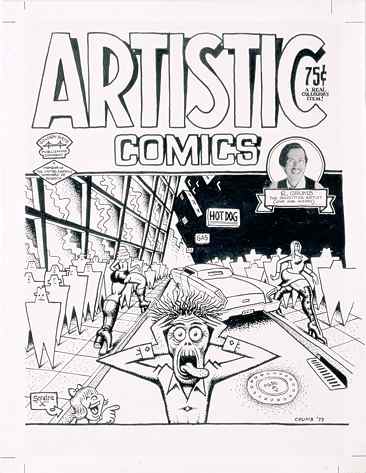
(above: R. Crumb, Artistic Comics, 1973, Drawing for comic book cover. Collection of Art Spiegelman. Reproduced courtesy of the artist and the Paul Morris Gallery, New York, New York. Photo by Robert Wedemeyer.)
The history of one
of America's great popular art forms is traced in the landmark exhibition
Masters of American Comics, on view at the Milwaukee Art 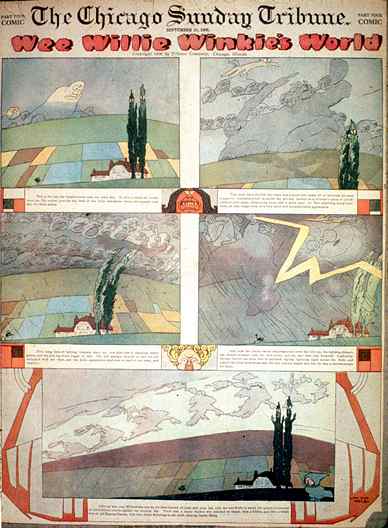 Museum April 29 - August 13, 2006. It is the first
major museum exhibition to examine the development of comic strips and books
from their genesis at the beginning of the 20th century to the present through
in-depth presentations of 15 influential artists. Masters of American
Comics features sketches, drawings, proofs, newspaper Sunday pages,
and comic books by Winsor McCay, Lyonel Feininger, George Herriman, E.C.
Segar, Frank King, Chester Gould, Milton Caniff, Charles M. Schulz, Will
Eisner, Jack Kirby, Harvey Kurtzman, R. Crumb, Art Spiegelman, Gary Panter
and Chris Ware. The exhibition is co-organized by the Hammer Museum,
Los Angeles, and The Museum of Contemporary Art, Los Angeles (MOCA). Unprecedented
in its scope, the exhibition provides understanding and insight into the
medium of comics as an art form. (right: Lyonel Feininger, Willie
Winkie's World, September 23, 1906, Newspaper Sunday page. Ohio State
University Cartoon Research Library, San Francisco Academy of Comic Art
Collection. Photo by Ron Hughes, Slide Service International, Columbus,
Ohio. © Artists Rights Society (ARS), New York / VG Bild-Kunst, Bonn.)
Museum April 29 - August 13, 2006. It is the first
major museum exhibition to examine the development of comic strips and books
from their genesis at the beginning of the 20th century to the present through
in-depth presentations of 15 influential artists. Masters of American
Comics features sketches, drawings, proofs, newspaper Sunday pages,
and comic books by Winsor McCay, Lyonel Feininger, George Herriman, E.C.
Segar, Frank King, Chester Gould, Milton Caniff, Charles M. Schulz, Will
Eisner, Jack Kirby, Harvey Kurtzman, R. Crumb, Art Spiegelman, Gary Panter
and Chris Ware. The exhibition is co-organized by the Hammer Museum,
Los Angeles, and The Museum of Contemporary Art, Los Angeles (MOCA). Unprecedented
in its scope, the exhibition provides understanding and insight into the
medium of comics as an art form. (right: Lyonel Feininger, Willie
Winkie's World, September 23, 1906, Newspaper Sunday page. Ohio State
University Cartoon Research Library, San Francisco Academy of Comic Art
Collection. Photo by Ron Hughes, Slide Service International, Columbus,
Ohio. © Artists Rights Society (ARS), New York / VG Bild-Kunst, Bonn.)
"Among the most innovative and influential art forms of the 20th century, comics have made a singular impact on visual culture that continues to this day," said Margaret Andera, coordinator of the exhibition at the Milwaukee Art Museum. "This exhibition underscores the importance of the art form and the extraordinary contributions of these 15 artists."
Comic strips and comic books were among the most popular and influential forms of mass media in the 20th century, and have been described as "one of America's few indigenous art forms" by Art Spiegelman. These 15 comic art masters defined an original form and raised it to the highest levels of artistic expression, reflecting on American culture with critical insight as well as popular appeal.
"Comic strips and comic books are quintessential components of American culture," said Andera. "We are very pleased to present an extensive exhibition that brings to light the work of these 15 cartoonists and establishes their roles as significant American artists with mesmerizing storytelling abilities, brilliant draftsmanship, and often biting social commentary."
Exhibition Details
Masters of American Comics
is the first art museum exhibition to examine comic strips and books on
this expansive scale. Each artist is represented by in-depth groupings
presented as a series of individual retrospectives featuring a range of
each artist's works from conceptual sketches and finished drawings to printer's
proofs, tear sheets, printed newspapers, comic books and graphic novels. The
exhibition layout highlights individual contributions of the artists and
the ways in which they reinvented the medium to significantly influence
their peers and subsequent generations. 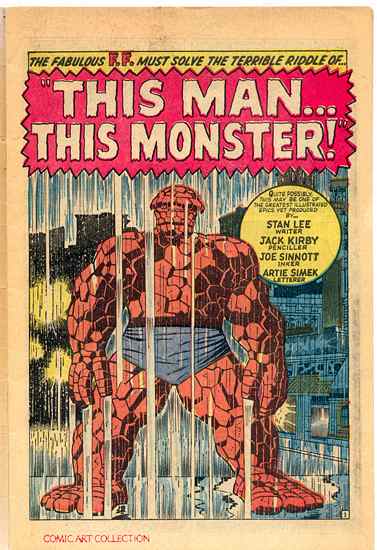
The exhibition is organized chronologically, beginning in the early 20th century with American newspaper comic strips through the influential work of such pioneering comic artists as Winsor McCay (Little Nemo in Slumberland) and George Herriman (Krazy Kat), who set the stage by defining the formal attributes of the genre in the early 1900s. Focusing on the great achievements of this new art form through the century's first decades, the exhibition also includes the groundbreaking work of Lyonel Feininger (The Kin-der-Kids and Wee Willie Winkie's World), E.C. Segar (Thimble Theatre), Frank King (Gasoline Alley), Chester Gould (Dick Tracy), Milton Caniff (Terry and the Pirates), and Charles M. Schulz (Peanuts).
The exhibition continues with the early Golden Age to the
rise of the independent comics movement. Comic books began as a form
in which newspaper comics were reprinted and, with the rise of such series
as Will Eisner's The Spirit and Jack Kirby's Captain America
and Fantastic Four, became the dominant popular medium for narrative
illustration. In addition to Kirby, particular attention is also paid
to Harvey Kurtzman, whose MAD Magazine transformed the medium into
one capable of great artistic expression and social commentary beginning
in the early 1950s. By the mid-1960s, R. Crumb's work in Zap Comix
added a new level of personal expression and extended the significant role
of independent and underground comic books and graphic novels. This
medium continues to evolve today through the innovations of such artists
as Art Spiegelman (Maus and In the Shadow of No Towers), Gary
Panter (Jimbo), and Chris Ware (Jimmy Corrigan: The Smartest Kid
on Earth). (right: Jack Kirby, Fantastic Four #51, June
1966, Comic book page. Michigan State University Libraries, Comic Art Collection.
Digital image © 2005 Echelon. Fantastic Four & © 2005 Marvel
Characters, Inc. Used with permission.)
Organization and Tour
Masters of American Comics is jointly organized by the Hammer Museum, Los Angeles, and The Museum of Contemporary Art, Los Angeles. The exhibition is co-curated by independent scholars John Carlin and Brian Walker and coordinated by Hammer Museum deputy director of collections and director of the Grunwald Center Cynthia Burlingham and MOCA assistant curator Michael Darling. The exhibition is made possible, in part, by the National Endowment for the Arts. At the Milwaukee Art Museum, the exhibition is coordinated by Margaret Andera, associate curator of contemporary art.
Before traveling to the Milwaukee Art Museum, the exhibition was on view at the Hammer Museum and The Museum of Contemporary Art, Los Angeles. After Milwaukee, the exhibition travels to The Jewish Museum, New York, and the Newark Museum, New Jersey, September 15, 2006 - January 28, 2007.
Catalogue
The exhibition is accompanied by an extensive, fully illustrated catalogue co-published by Yale University Press with the Hammer Museum, Los Angeles, and The Museum of Contemporary Art, Los Angeles. It features a historical essay by John Carlin and contributions on the individual artists by a variety of novelists, historians, critics and artists. Designed by award-winning graphic designer Lorraine Wild of Green Dragon Office in Los Angeles, the publication features more than 300 color reproductions. The catalogue is on sale in the Milwaukee Art Museum.
Editor's note: RL readers may also enjoy:
Read more articles and essays concerning this institutional source by visiting the sub-index page for the Milwaukee Art Museum in Resource Library.
Visit the Table of Contents for Resource Library for thousands of articles and essays on American art.
Copyright 2006 Traditional Fine Arts Organization, Inc., an Arizona nonprofit corporation. All rights reserved.