Editor's note: The Dayton Art Institute provided
source material to Resource Library for the following article or
essay. If you have questions or comments regarding the source material,
please contact the Dayton Art Institute directly through either this phone
number or web address:
Marilyn Monroe: Life as
a Legend
April 28 - June 24, 2007
From April 28
to June 24, 2007 The Dayton Art Institute will present an exhibition and
one-woman play on the life of Marilyn Monroe. Marilyn Monroe: Life as
a Legend uses a wide range of artists and media to explore the public
and private life of one of the world's most recognizable icons. Through
the art of Andy Warhol, Allen Jones, Peter Blake, Richard Avedon, Bert Stern,
Henri Cartier-Bresson, and others, this exhibition of nearly 250 photographs,
prints, paintings, videos, and sculpture captures Marilyn's rise to stardom.
Nearly 80 artists depict the late movie star in styles ranging from fashion
photography to Pop Art.
"To this day, the public continues to have a fascination
with Marilyn Monroe," said J. Bradford Tillson, interim director of
The Dayton Art Institute. "This exhibition uses the art of photography,
painting and sculpture to celebrate her legendary life. The diversity of
the artists represented allows the visitor to relive all aspects of Marilyn's
life, from the young ingenue to one of the most popular film stars of the
1950s."
Marilyn Monroe: Life as a Legend
includes Tom Kelley's famous Red Velvet Pose for Playboy magazine,
Douglas Kirkland's sensuous bed sheet shots, One Night with Marilyn,
and Bert Stern's Here's to You, a photograph of Marilyn with champagne
glass in hand, celebrating her entrée back into Hollywood.
Marilyn's most recognizable film moments are depicted,
such as the famous subway grate scene with Tom Ewell in The Seven Year
Itch, as photographed by Sam Shaw. Ernst Haas's pensive behind-the-scene
shots of Marilyn in The Misfits are also displayed. Numerous contemporary
artists, such as Andy Warhol and Mel Ramos, offer their own Marilyn interpretations.
"This exhibition is a must see for any fan of Marilyn
Monroe," commented Tillson. "Fans who lived during Marilyn's
lifetime will recall all of their favorite memories of her. Those who developed
a fascination with her years after her death will gain new insights into
Marilyn as both a person and a movie screen legend."
Marilyn Monroe: Life as a Legend was
organized by Artoma in Hamburg, Germany and circulated by International
Arts & Artists in Washington, DC. The exhibition in Dayton is sponsored
by Steve R. Rauch, Inc.
A curator's peerspective
- Marilyn Monroe defined an era. Her innocence, beauty,
and sensuality captivated and fascinated generations of admirers eager
to see the charismatic Hollywood starlet on the silver screen and on the
cover of popular magazines. Following her tragic death in 1962, it became
apparent that there was something beyond her extraordinary beauty and beguiling
sexuality, a mystique that has continued to evolve to the present day and
which is now an essential part of our cultural identity.
-
- The Dayton Art Institute is pleased to present Marilyn
Monroe: Life as a Legend. This traveling exhibition, which generated
a "Marilyn fever" throughout Europe when it was exhibited in
England, Spain, Turkey, and Finland, explores Monroe's exhilarating rise
to stardom, her striking transformation from Norma Jean Baker into the
celebrated icon, and her shocking death. Nearly 80 artists from the United
States and abroad are included in this intriguing exhibition. Stylistically
and thematically diverse, this exhibition provides an opportunity to reconsider
Monroe's dynamic public persona, which was crafted during her lifetime
and cultivated after her untimely death, as well as her own anxiety surrounding
her private identity. This large exhibition, comprising nearly 250 photographs,
prints, paintings, videos, and sculpture, is a fascinating and multi-dimensional
portrait of Monroe the person and the celebrity.
-
- Marilyn Monroe's attraction stems in part from her alluring
beauty and sensuality. She was one of the most photographed women in history.
Her image was captured by the most celebrated photographers of her day
including Tom Kelley, Douglas Kirkland, and Bert Stern.
-
- "I had nothing on but the radio"
-
- This is how Monroe recalled the austere surroundings
in which Kelley's (in)famous Red Velvet Photos were shot. In 1954,
one image from this provocative series created a sensation, appearing in
Playboy as the magazine's first centerfold. Sensuous images like
these inspired other photographers including Douglas Kirkland. In his celebrated
series One Night with Marilyn, the star bewitches the camera with
her flirtatious personality and tantalizing state of undress, lying in
bed covered only by a white sheet. Bert Stern was another photographer
captivated by Monroe. In The Last Sitting, which was intended to
celebrate the actress's entrée back into Hollywood in1962, Stern
captures Monroe's joy for life in the well-known image Here's to You.
-
- Monroe's most recognizable film moments are also exhibited
including Sam Shaw's well-known photograph of the young star standing over
a subway grate during the filming of The Seven Year Itch and Ernst
Haas's pioneering photographs of Monroe on the set of The Misfits.
Haas's spontaneous photographs reveal the tumultuousness and tediousness
of life on the movie set. These highly personal images offer an alternative
view of Monroe as a vulnerable and discontented woman, which differs significantly
from the electrifying persona manufactured by Hollywood.
-
- "I'm an artificial product"
-
- This statement by Monroe, made during a 1960 interview
for Marie Claire magazine, reveals the troubling side of her celebrity.
Fame, an artificial creation, is a theme explored by artists such as Robert
Indiana, Christian Blau, Mel Ramos, and Andy Warhol.
-
- Warhol's series Marilyn Monroe (Marilyn) was published
in 1967 by Factory Additions, a publishing arm Warhol established with
art gallery dealer David Whitney. These vibrant, multi-colored screenprints
based on Gene Korman's publicity shot for the film Niagara, made
in 1953, are now iconic images, which were inspired by the film star's
death in 1962. Monroe's vividly mass-produced prints present her as a commodity,
a sobering and ominous metaphor for fame. Contemporary artist Christian
Blau examines this dark side of celebrity with Overexposure, 2003.
Blau ominously juxtaposes an eerie photograph of Norma Jean with the last
photograph taken of Marilyn Monroe in the morgue. The work's title focuses
on the disproportionate attention Monroe received in her lifetime, which
many believe contributed to her premature death. The artists in this exhibition
examine an ardent public's impulse to fulfill their own personal or societal
needs through celebrity adulation. Monroe echoed this outlook saying, "People
had a habit of looking at me as if I were some kind of mirror instead of
a person."
-
- No one has stimulated the collective imagination quite
like Marilyn Monroe. A revered American icon and a beloved part of our
cultural identity, she inspired some of the most significant contemporary
artists, making Marilyn Monroe the most fragile and loveable legend of
all.
-
- -- by Laine Snyder, Assistant Curator of American and
European Art , The Dayton Art Institute
-
Related lectures
-
- The Image of Marilyn Monroe in Popular Culture
- Thursday, May 24
- 7:00 p.m.
- Jeffrey Brown, Professor of Popular Culture at Bowling
Green State University and consulting Curator of Contemporary Art at the
Toledo Museum of Art, will address the enduring representations of Marilyn
Monroe in the media and how the late actress has been symbolized as American
culture's ideal form of female sexuality.
- Fee.
- Reservations required; call (937) 223-5277, ext. 318.
-
- Marilyn Monroe: Through the Photographer's Lens
- Tuesday, June 5
- 6:00 p.m.
- Join Alex Nyerges, former director of The Dayton Art
Institute, as he discusses the many sides of Marilyn Monroe as revealed
through the photographer's lens. One of the most photographed women of
all time, Monroe seemed most at home in front of the camera. Examine the
role of photographs in contributing to the mystique that was Marilyn Monroe
and the diversity of the photographers who created them.
- Fee.
- Reservations required; call (937) 223-5277, ext. 318.
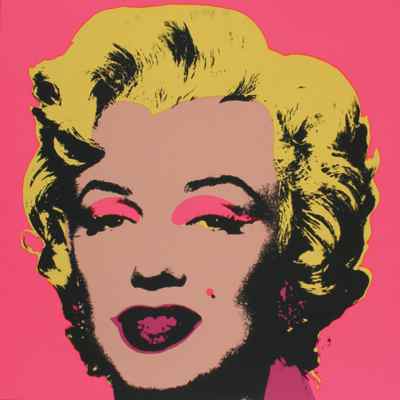
(above: After Andy Warhol, Marilyn, published by
Sunday B Morning, 1967, Screenprint, Artoma Collection, Hamburg © Andy
Warhol Foundation for the Visual Arts/ARS, New York)
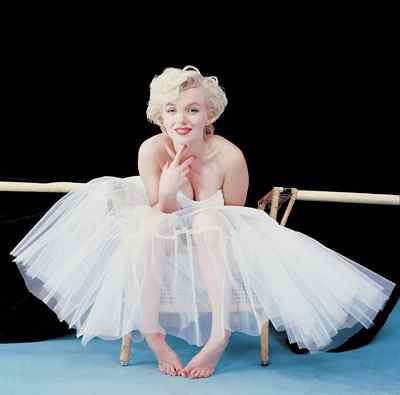
(above: Milton H. Greene, Marilyn Monroe, New York City,
"Ballerina" sitting, 1954, Fine Art Inkjet printed on Designjet
5000PS UV printer made by Hewlett Packard on Albrecht Durer media manufactured
by Hahnemuhle, Artoma Collection, Hamburg © 1994, Milton H. Greene
Archives, Inc., www.archivesmhg.com)
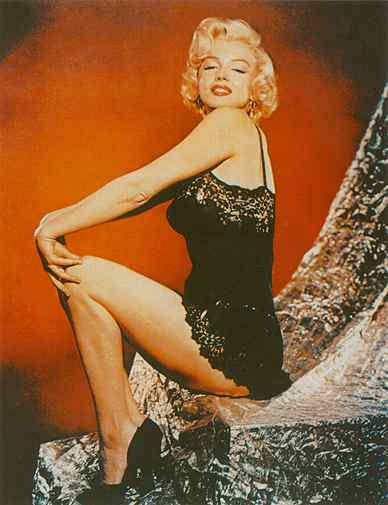
(above: Bernard of Hollywood (Bruno Bernard), Marilyn
posing for Niagara, Silver gelatin print, Artoma Collection, Hamburg
© Bruno Bernard with kind permission of Susan Bernard)
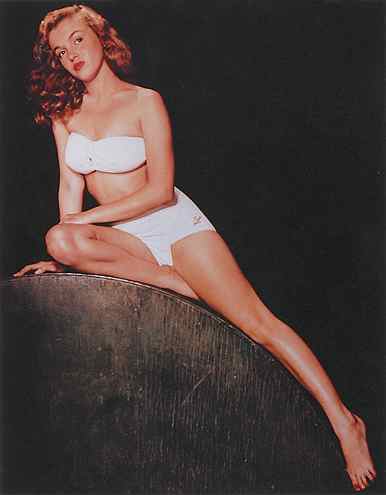
(above: Bernard of Hollywood (Bruno Bernard), Norma Jeane
- Pin-Up (Discovery Series), C-print, Artoma Collection, Hamburg ©
Bruno Bernard with kind permission of Susan Bernard)
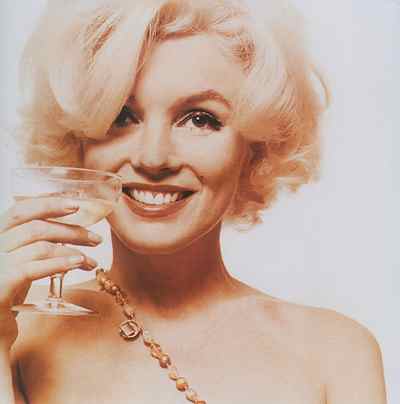
(above: Bert Stern, "Here's to you" from "The
Last Sitting," 1962, Colour print (Kodak Professional), edition
11/250, Artoma Collection, Hamburg © Bert Stern, 1982)
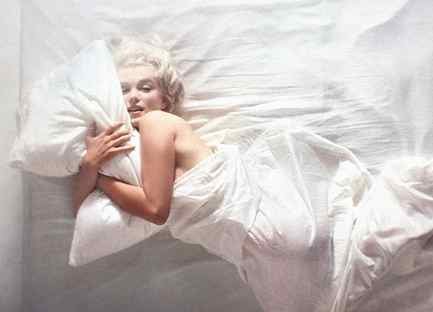
Douglas Kirkland, One Night with Marilyn, 17.11.1961
(2), Fine Art Inkjet printed on Designjet 5000PS UV printer made by Hewlett
Packard on Albrecht Durer media manufactured by Hahnemuhle, Courtesy of
the artist, Los Angeles © Douglas Kirkland
Read more articles and essays concerning this source by
visiting the sub-index page for the Dayton
Art Institute in Resource Library.
Visit the Table
of Contents for Resource Library for thousands
of articles and essays on American art.
Copyright 2007 Traditional
Fine Arts Organization, Inc., an Arizona nonprofit
corporation. All rights reserved.