R. W. Norton Art Gallery
Shreveport, LA
318-865-4201
http://www.softdisk.com/comp/norton/
American Landscapes from the Paine Art Center and Arboretum
September 5 through October 24, 1999
Nathan and Jessie Kimberly Paine,
the founders of the Paine Art Center and
Arboretum and source for most of paintings in the permanent collection,
sought to collect art celebrating nature in its varying moods. The Paines
began collecting paintings to decorate their Tudor Revival estate near the
Fox River in Oshkosh, Wisconsin. They purchased the bulk of their American
collection from New York, Chicago and Los Angeles art galleries over a two
year period between 1926 and 1928. The Paines eventually donated their estate
and its contents for use as a museum. 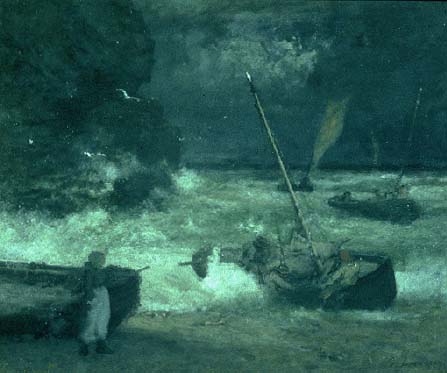
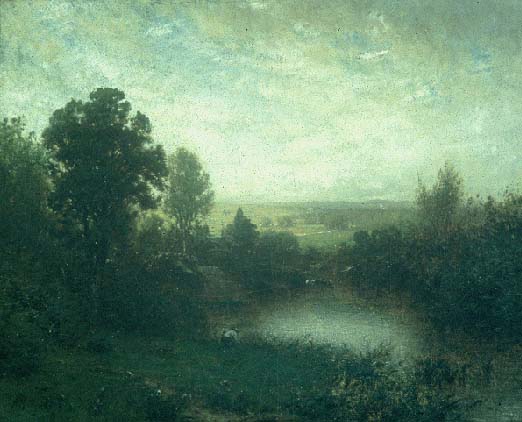
These forty-seven works of art from the permanent collection of the Paine Art Center and Arboretum have been selected in celebration of its 50th Anniversary. The exhibit presents over a century of Realist, Tonalist and Impressionist paintings and works on paper. The collection includes examples from the Hudson River School influenced work of James MacDougal Hart, the misty landscapes of George Inness, the sunlit scenes of Maurice Braun, the visionary canvases of Ralph Albert Blakelock, the impasto pigments of John Costigan and the Midwestern images of Grant Wood.
Many other important American artists are represented in
the Paine's collection. The Tonalism of J. Francis Murphy, Alexander Helwig
Wyant, Dwight 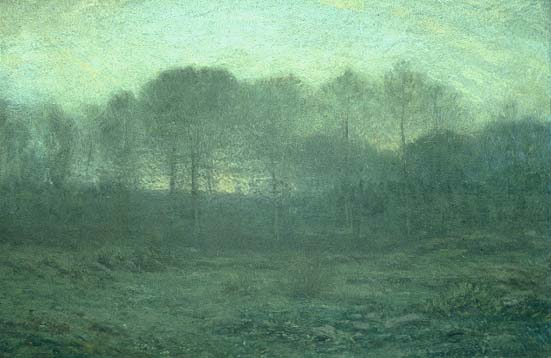 Tryon
and more flourished in America from about 1880 to around 1920. Their poetic
evocation of the natural landscape accomplished through a misty use of unifying
single color and soft accent are a central portion of the Paine Collection.
Inness' creative and intellectual powers are demonstrated in the maturity
of A Spring Morning Near Montclair, painted in 1892.
Tryon
and more flourished in America from about 1880 to around 1920. Their poetic
evocation of the natural landscape accomplished through a misty use of unifying
single color and soft accent are a central portion of the Paine Collection.
Inness' creative and intellectual powers are demonstrated in the maturity
of A Spring Morning Near Montclair, painted in 1892. 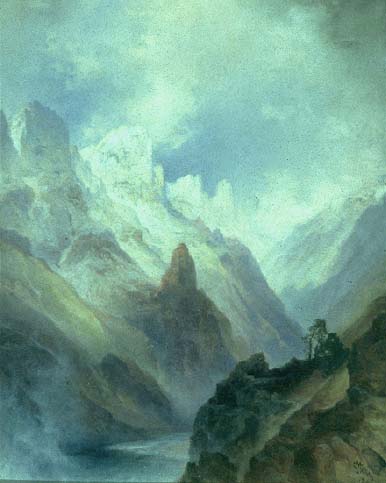
Thomas Moran emphasizes the scale, beauty and nobility
of the American West in works like Lower Falls, Yellowstone Canyon
while Winslow Homer's watercolor Lake St. John, Canada, was painted
on a fishing trip during the summer of 1895. 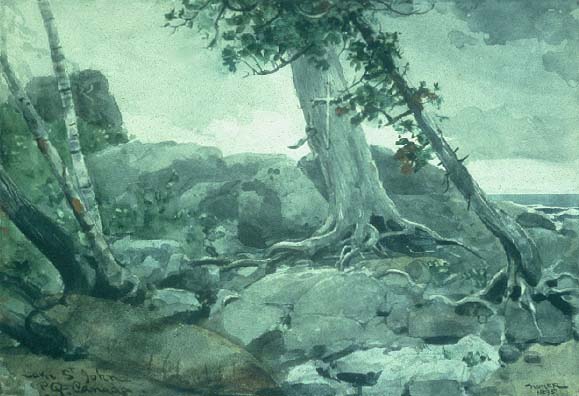
The spiritual relationship between the artist and landscape is evident in four visionary works by Ralph Albert Blakelock. Moonlight, Indian Camp and Landscape at Sunset are all typical of the dark, Barbizon style for which he was known. Also included is Seal Rocks, painted around 1880, a prime example of his innate romanticism.
Ultimately, the Paine's collection includes the revival
of traditional figurative painting in both genre and landscape. Beginning
with a large gift in 1976, the Paine Art Center began collecting American
landscape prints from the era of the Great Depression. The Regionalism of
Thomas Hart Benton and Grant Wood lifted small-town rural America into the
realm of Romanticism. 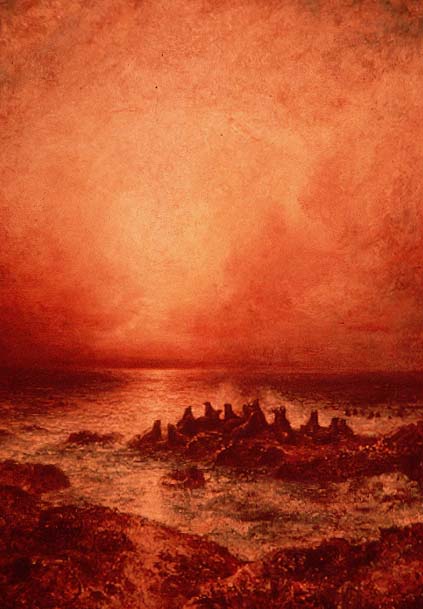
Wood, like Benton and John Steuart Curry, repeatedly proclaimed
the popular myth of Jeffersonism in American values as effective resistance
against the threat of internationalism and modernist influences in art.
Although the Paine Art Center's collection of American landscapes runs through
an entire century and several historical eras, one current flows through
all the works, the ongoing relationship between nature and the individual
artist.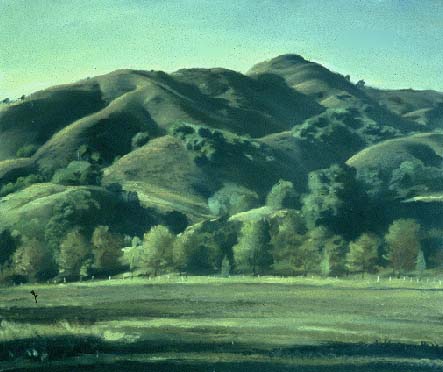
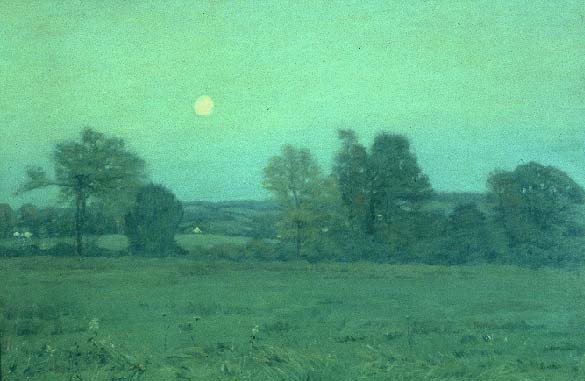
From top to bottom:Henry Golden Dearth, Summer Landscape, c. 1881, oil on canvas; George Inness, Off the Coast of Cornwall, England, 1887, oil on canvas; Alexander H. Wyant, Morning Twilight, 1903, oil on pabel; Thomas Moran, Lower Falls, Yellowstone Canyon, 1919, oil on canvas; Dwight W. Tryon, Morning Twilight, 1903, oil on panel; Winslow Homer, Lake St. John, Canada, 1895, watercolor on paper; Ralph Albert Blakelock, Seal Rocks, c. 1880, oil on canvas; Emil Jean Kosa, Jr., Agouras, n.d., oil on canvas
Read more about the R. W. Norton Art Gallery in Resource Library
Editor's note: RL readers may also enjoy an image of Yellowstone Falls from the TFAO photo library
For further biographical information on selected artists cited above please see America's Distinguished Artists, a national registry of historic artists.
Search Resource Library for thousands of articles and essays on American art.
Copyright 2010-2013 Traditional Fine Arts Organization, Inc., an Arizona nonprofit corporation. All rights reserved.