Washington D.C.
(202) 387-2151
Georgia O'Keeffe: The Poetry of Things
April 17 through July 18, 1999
Georgia O'Keeffe:
The Poetry of Things is the first exhibition to
focus in-depth on O'Keeffe's combined spirituality and aesthetics as portrayed
in her paintings of objects. It examines her intimate relationship with
the objects she chose, how she saw them, and the interpretation of the object
on the canvas The exhibition's point of departure is the moment in 1915
when O'Keeffe first divided her early revolutionary charcoals into two 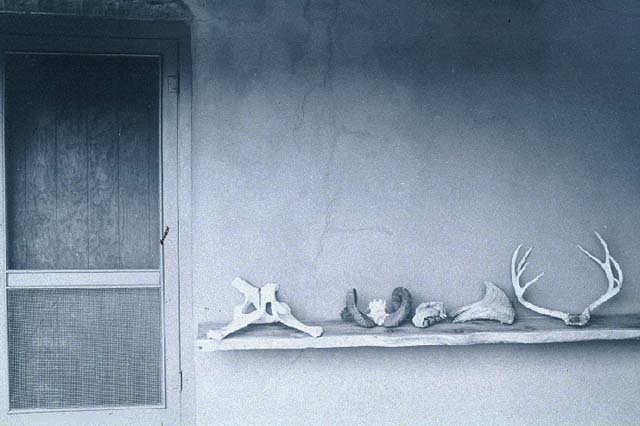 categories, "landscapes"
and "things". The works that she designated "things"--
often images that are more abstract than illusionistic--have a decidedly
organic character. Indeed, patterns in these compositions correspond to
those found in her later depictions of apples, trees, leaves, shells, and
bones. O'Keeffe, by virtue of her language of color and form, transformed
the ebbs and flows of nature's forms into objects for contemplation.
categories, "landscapes"
and "things". The works that she designated "things"--
often images that are more abstract than illusionistic--have a decidedly
organic character. Indeed, patterns in these compositions correspond to
those found in her later depictions of apples, trees, leaves, shells, and
bones. O'Keeffe, by virtue of her language of color and form, transformed
the ebbs and flows of nature's forms into objects for contemplation.
The
legacy of Georgia O'Keeffe is connected in many ways to objects that she
found, admired, collected and painted. They alone most clearly convey her
chosen form of expression.
Today the public may know more about elements of O'Keeffe's
personal biography and the triumphs and 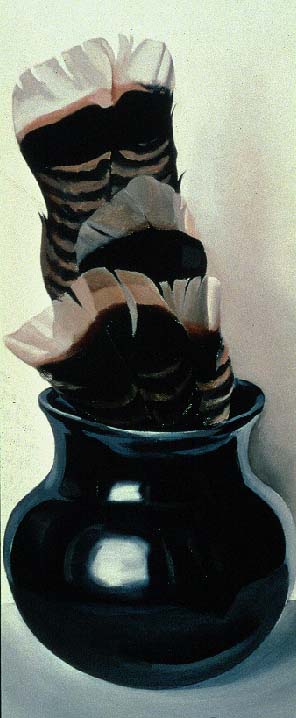 tragedies of her life with Alfred Stieglitz than they
know of her deeply personal approach to art. Ironically, we still don't
know enough about the philosophy and aesthetics underlying the choices she
made in her own work. This exhibition of 68 works, dating from 1908 to 1963,
brings a fruitful line of inquiry into the rich and complex personal iconology
which O'Keeffe created over the course of her career.
tragedies of her life with Alfred Stieglitz than they
know of her deeply personal approach to art. Ironically, we still don't
know enough about the philosophy and aesthetics underlying the choices she
made in her own work. This exhibition of 68 works, dating from 1908 to 1963,
brings a fruitful line of inquiry into the rich and complex personal iconology
which O'Keeffe created over the course of her career.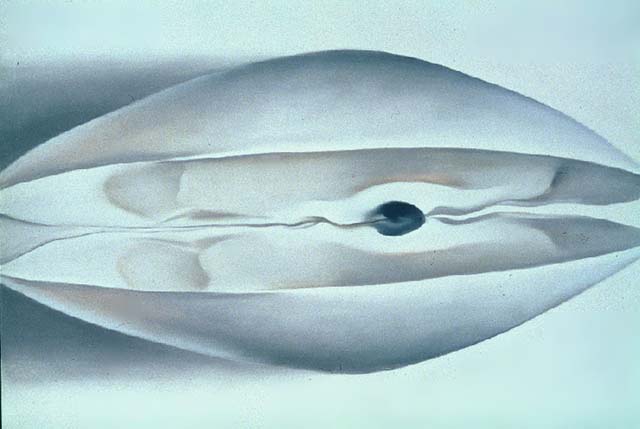
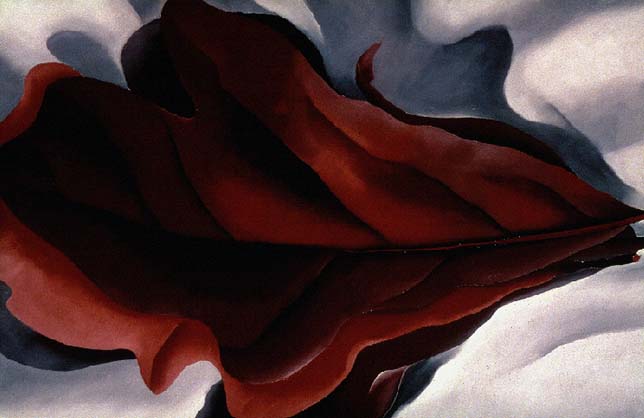
For O'Keeffe, the object alone could never substitute for the work of art. Color was her formal language. When asked to choose whether the flower or the color was her focus, O'Keeffe refused to say. Instead she spoke of the primacy of aesthetics. "What is my experience of the flower if not color" she declared.
 Though
explaining little about her themes and sources, she credited her teacher
Arthur Wesley Dow for giving her something to do with her finely honed skills
in watercolor and oil. She also expressed an affinity for music and the
economy of Chinese poetry. Toward the end of her life there is the poignancy
of her repeated request to be read to from two books: Wassily Kandinsky's
Concerning the Spiritual in Art and Okakura's The Book of Tea.
Though
explaining little about her themes and sources, she credited her teacher
Arthur Wesley Dow for giving her something to do with her finely honed skills
in watercolor and oil. She also expressed an affinity for music and the
economy of Chinese poetry. Toward the end of her life there is the poignancy
of her repeated request to be read to from two books: Wassily Kandinsky's
Concerning the Spiritual in Art and Okakura's The Book of Tea.
 To see
and appreciate O'Keeffe's method is to become deeply rooted in the American
experience -- particularly
To see
and appreciate O'Keeffe's method is to become deeply rooted in the American
experience -- particularly 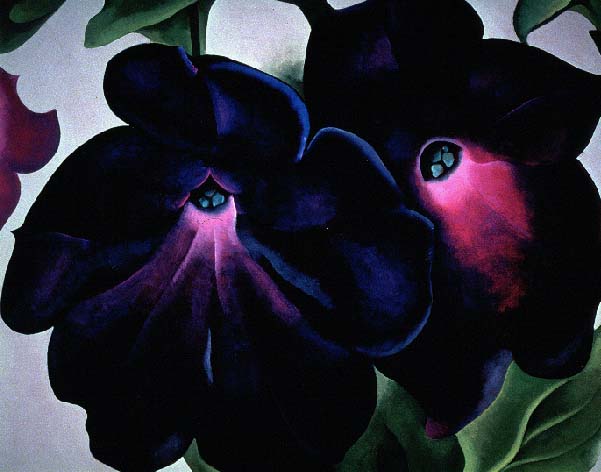 America's close identification with nature. Understanding
O'Keeffe's process can be as simple as taking a walk outdoors or as complex
as transcending visible reality, capturing what she called "the unexplainable
thing in nature." O'Keeffe's imaginative process was poetic and precise.
The images she conveyed in her paintings can be said to mirror an active
mind fetching something new and then registering it into the field of consciousness.
Therein lies her artistic poetry of selection, elimination, and emphasis.
America's close identification with nature. Understanding
O'Keeffe's process can be as simple as taking a walk outdoors or as complex
as transcending visible reality, capturing what she called "the unexplainable
thing in nature." O'Keeffe's imaginative process was poetic and precise.
The images she conveyed in her paintings can be said to mirror an active
mind fetching something new and then registering it into the field of consciousness.
Therein lies her artistic poetry of selection, elimination, and emphasis.
A comprehensive catalogue, the first to focus exclusively
on O'Keeffe's extraordinary achievement in still life 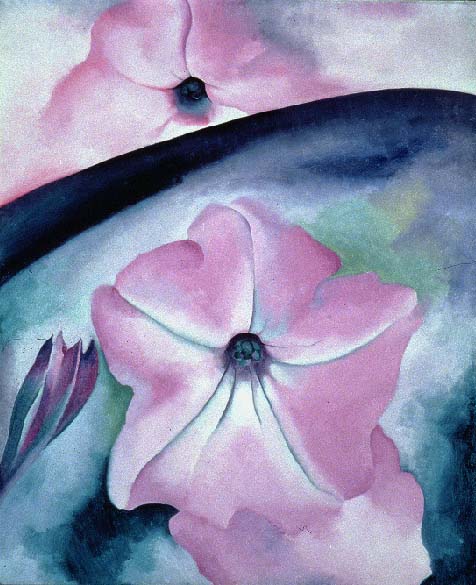 painting, will document the exhibition. It will include
an essay by The Phillips Collection's
painting, will document the exhibition. It will include
an essay by The Phillips Collection's 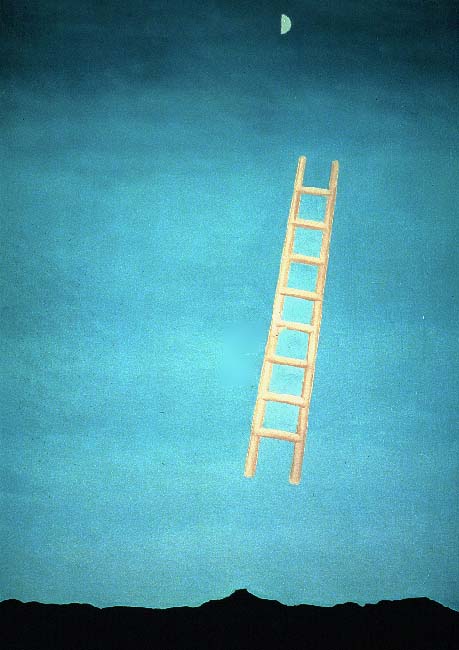 Curator, Dr. Elizabeth Hutton Turner, who will investigate
the unique melding of Eastern and Western thought in O'Keeffe's approach
to objects. A second essay by independent scholar/art historian Dr. Marjorie
Balge-Crozier will compare O'Keeffe's invention in still life to academic
practices and traditional models in Western art. Each essay will contain
comparative black and white illustrations, including contextual photographs
of O'Keeffe's studios, collections, and exhibition installations as well
as related historical and contemporary works. In addition, the catalogue
will include a chronology and color plates of each work in the exhibition.
Curator, Dr. Elizabeth Hutton Turner, who will investigate
the unique melding of Eastern and Western thought in O'Keeffe's approach
to objects. A second essay by independent scholar/art historian Dr. Marjorie
Balge-Crozier will compare O'Keeffe's invention in still life to academic
practices and traditional models in Western art. Each essay will contain
comparative black and white illustrations, including contextual photographs
of O'Keeffe's studios, collections, and exhibition installations as well
as related historical and contemporary works. In addition, the catalogue
will include a chronology and color plates of each work in the exhibition.
 Special
tickets are required for admission to Georgia O'Keeffe: The Poetry of
Things.
Special
tickets are required for admission to Georgia O'Keeffe: The Poetry of
Things.
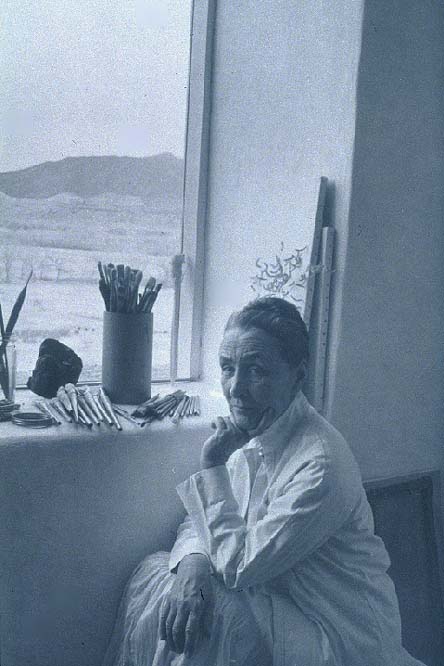
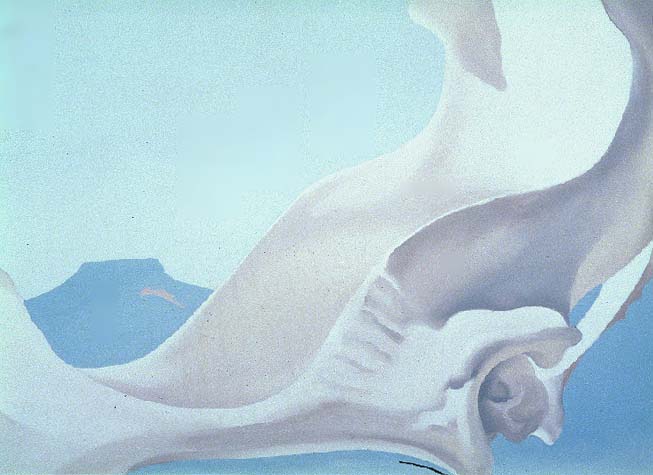
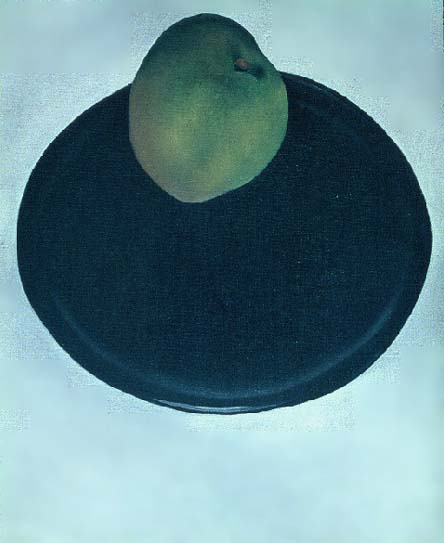
From top to bottom: Laura Gilpin, Georgia O'Keeffe, 1953, Amon Carter Museum, Fort Worth, Texas, Bequest of Laura Gilpin; Myron Wood, Recuerdos (Memories), 1981, Courtesy of Pikes Peak Library District; Georgia O'Keeffe, Turkey Feathers in Indian Pot, 1935, oil on canvas, Private collection; Georgia O'Keeffe, Slightly Open Clam Shell, 1926, pastel on paperboard, Curtis Galleries, Minneapolis, Minnesota; Georgia O'Keeffe, Large Dark Red Leaves on White, 1925, oil on canvas, The Phillips Collection, Washington, DC; Georgia O'Keeffe, Pelvis with Pedernal, 1943, oil on canvas, Munson-Williams-Proctor Institute Museum of Art, Utica, NY: 50.19; Georgia O'Keeffe, Black and Purple Petunias, 1925, oil on canvas, Maryellie Johnson; Georgia O'Keeffe, Petunia II, 1924, oil on canvas, The Georgia O'Keeffe Museum, Gift of the Burnett Foundation and Gerald and Kathleen Peters; Georgia O'Keeffe, Ladder to the Moon, 1958, oil on canvas, Collection of Emily Fisher Landau, New York; Georgia O'Keeffe, Green Apple on Black Plate, 1922, oil on canvas, Lent by the Birmingham Museum of Art, Birmingham, Alabama, Museum purchase with funds provided by the 1981-82 Beaux - Arts Committee, Museum Store, Donors, and matching funds from Mr. and Mrs. Jack McSpadden.
Search for more articles and essays on American art in Resource Library. See America's Distinguished Artists for biographical information on historic artists.
This page was originally published in 1999 in Resource Library Magazine. Please see Resource Library's Overview section for more information.
Copyright 2012 Traditional Fine Arts Organization, Inc., an Arizona nonprofit corporation. All rights reserved.